Martin Baker
PHOTOGRAPHY

PLACES


Ruined Farm House
On a road trip, and at mid day, I photographed these ruins using Ilford XP2 Super film. It is a classic example of a mid-to-late 19th century stone cottage, typical of rural South Australia's pastoral settlement era.
The building features random rubble stone masonry with rendered quoins (corner stones), characteristic of South Australian colonial architecture from roughly the 1850s-1880s.
Where I took this series of photos on the Adelaide-Broken Hill road passes through several historic regions including the Mid North and Far Mid North. Ruins dot this landscape, remnants of the pastoral expansion period when settlers established wheat farms and sheep stations. These properties often failed due to marginal rainfall and economic hardship.
#1612


#1648
#1643
#1635
Sheds and secondary housing behind the farm house.
Lismore

#1689
Lismore is a regional town in northern New South Wales, located at the junction of the Wilsons River and Leycester Creek. It is one of the most flood-prone urban centres in Australia and my photo of the building by the river shows a flood depth marker on its side. See the flood marker on #1675.
On February 28, 2022, the biggest flood in modern Australian history inundated Lismore, with about 670 millimetres of rain falling over two days and waterways rising to a peak of 14.4 metres.
The historic Post and Telegraph Office building on the corner of Molesworth and Magellan Streets was constructed in 1897 and is now used for general office space #1689.

#1675
Finniss
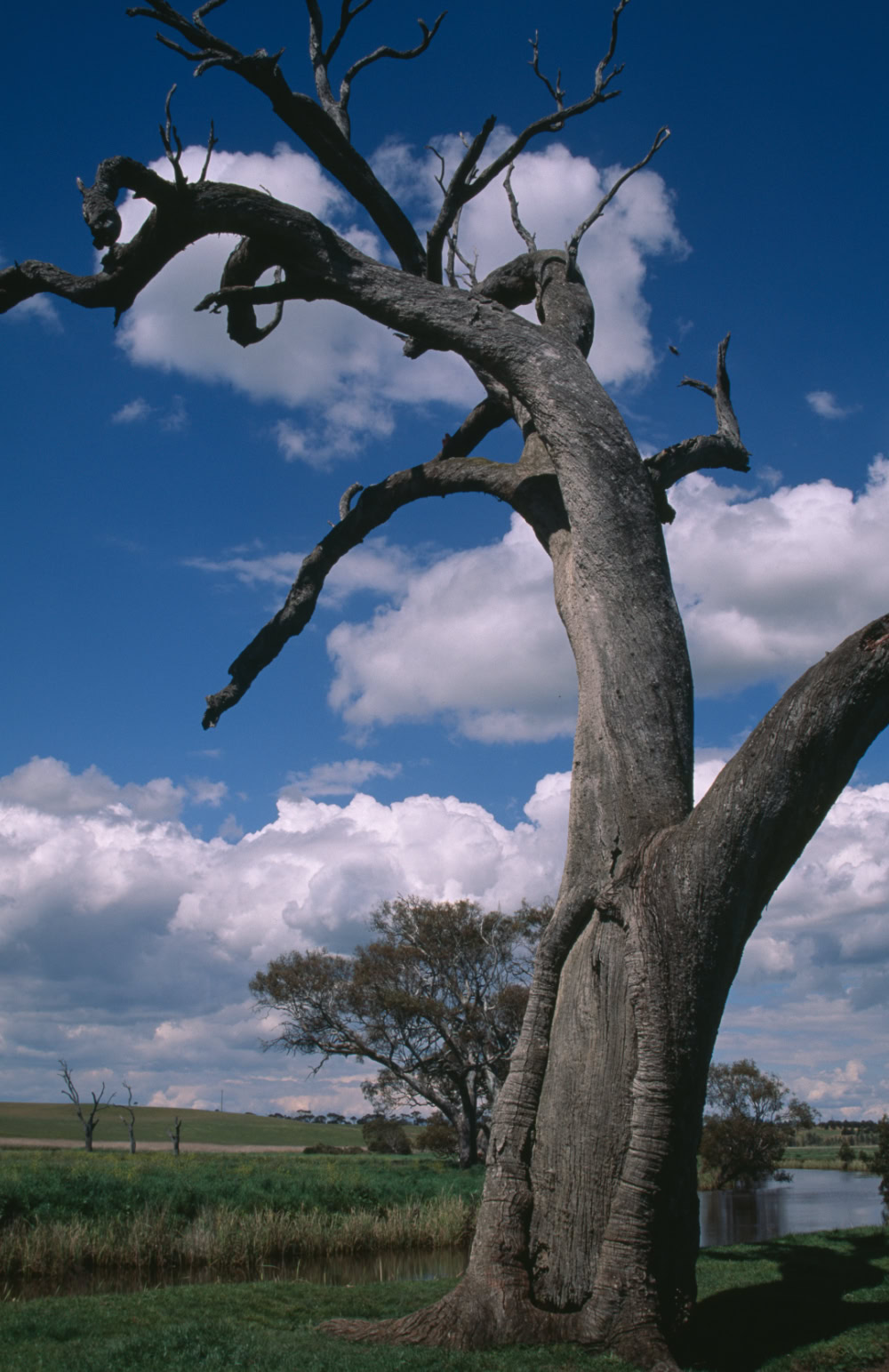
I went down to Finniss with a roll of Fuji Velvia 50 slide film and photographed #1534C in 1997. On receiving the slides after processing I was disappointed with my composition and the message my image portrayed for the Canoe tree. I then went back a month later with a roll of B&W film to redo the image #1534.
I was a lot happier with the outcome and entered it a competition with the name of “Forgotten Dream Time”. The title and now in B&W, I felt conveyed my feelings about the tree much better.
These trees are cultural heritage sites where Aboriginal people removed large sections of bark to create canoes, shields, or shelters.
The location at Finniss, south of Adelaide, places this in Ngarrindjeri land and the people who used this tree were probably the Warki tribe. These scar trees are increasingly rare and are now protected under heritage legislation.

#1534
#1534C
Harvester #1580
This an old horse-drawn harvester or reaper-binder (also called a "binder"), which was commonly used in Australian agriculture from the late 1800s through the early-to-mid 1900s. I photographed this near Finniss on my way to redo the image of the Canoe tree.
These machines were pulled by horses and would cut grain crops (wheat, oats, barley) and bind them into sheaves using twine. They were revolutionary technology in their time, replacing hand harvesting with scythes.
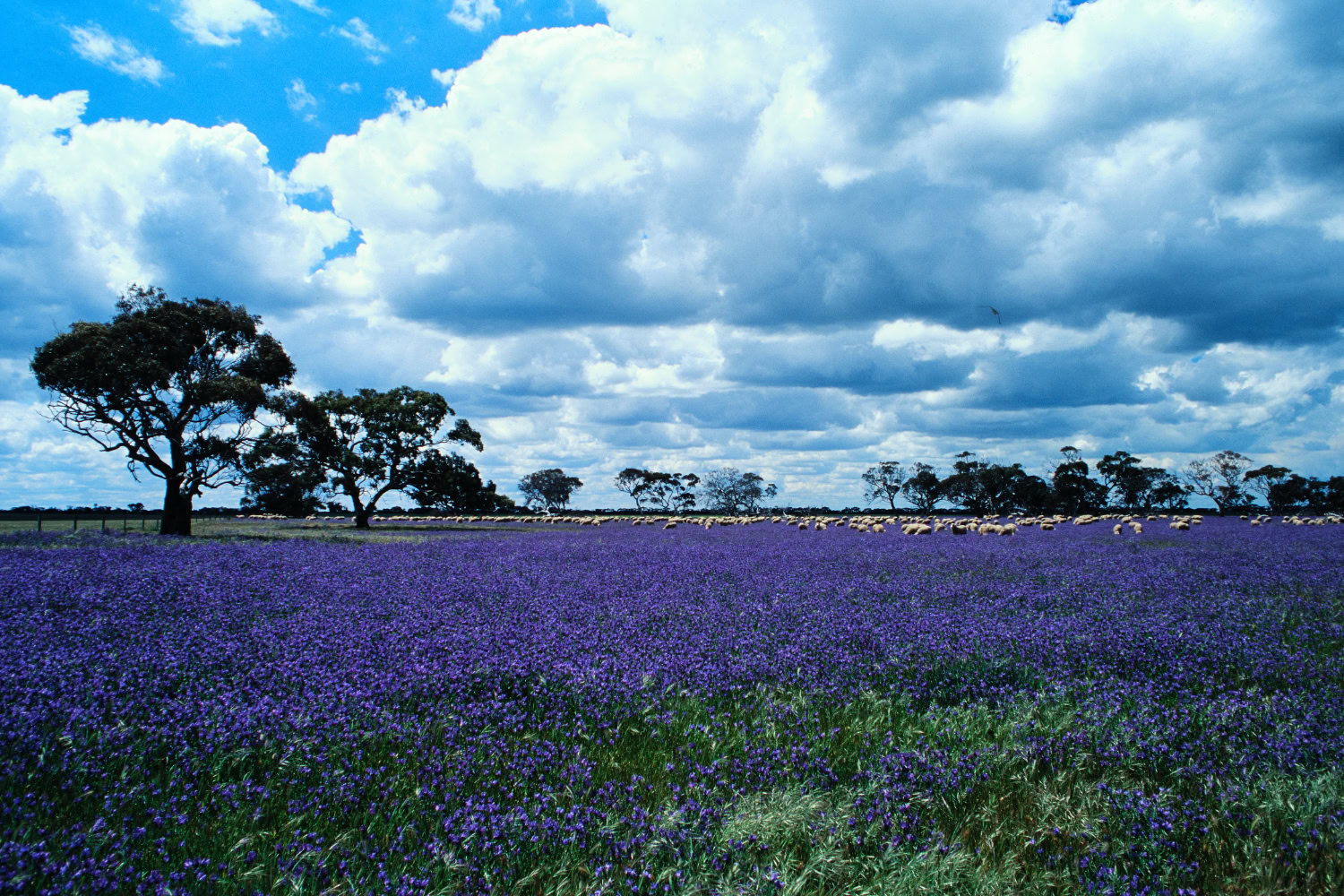
The image #1550 was taken just up the road from the harvester and the colour of the Salvation Jane in the field was as I saw it. However the Velvia film did over enhance the clouds and sky.

#1580
#1550
Mintaro

#10532
Martindale Hall (#10532) is a magnificent Georgian-style mansion with Italianate influences, situated near Mintaro in the Clare Valley. It's one of South Australia's most significant historic properties and offers a fascinating glimpse into the lavish lifestyle of 19th-century colonial pastoralists.
Martindale Hall was built between 1879-1880 for Edmund Bowman Junior at a cost of £30,000. Bowman was a wealthy bachelor pastoralist who commissioned a London architect (Ebenezer Gregg) to design the mansion. He imported 50 highly skilled English tradesmen to help build the structure, which features meter-thick walls, five-meter-high ceilings, imposing black and white marble floors, and a hand-carved Tasmanian blackwood and oak staircase.
The Hall currently operates as a living museum and is open to the public six days a week.
Mintaro is a charming historic town nestled in the eastern Clare Valley, about 126 kilometers north of Adelaide in South Australia's Mid North. It's located between the Clare and Gilbert Valleys at the foot of Mount Horrocks.
The village is of great historical importance, having been declared a State Heritage Area for South Australia in 1984, making it the state's first rural heritage area. The town was established in 1849 and contains thirty-three state heritage-listed sites (#10552 - #10536). The historic center features a predominance of early Victorian buildings along the main street, Burra Street (#10534), creating a well-preserved example of a mid-19th century village.
The town has a fascinating history tied to South Australia's development. During the 1840s and 1850s, it served as an important staging point for bullock teams transporting copper from the Burra mines to Port Wakefield. From the 1860s onwards, Mintaro became South Australia's leading producer of high-quality slate, with slate production continuing from what's believed to be Australia's oldest continuously operating quarry.
The surrounding countryside is particularly picturesque, with locals describing it as resembling rustic Tuscany in summer and Ireland's lush green rolling hills in winter (#10564 and #10569).

#10535

#10552

#10554

#10536

#10564

#10569

#10534

Copyright 2026 Martin Baker ALL RIGHTS RESERVED
